Coaching vs. Therapy: What's the Difference
Coaching vs. Therapy: What's the Difference, and How Do You Know Which One You Need When Navigating Loss, Transition, or Grief?
Table of Contents
I. Introduction
II. Therapy: Healing What Happened
III. Coaching: Building What’s Next
IV. Where the Line Gets Blurry (and Why It Matters)
V. Why Nurses and Healthcare Professionals Make Exceptional Coaches in This Space
VI. So, Which One Do You Need?
VII. Ready to Become That Support for Others?
I. Introduction
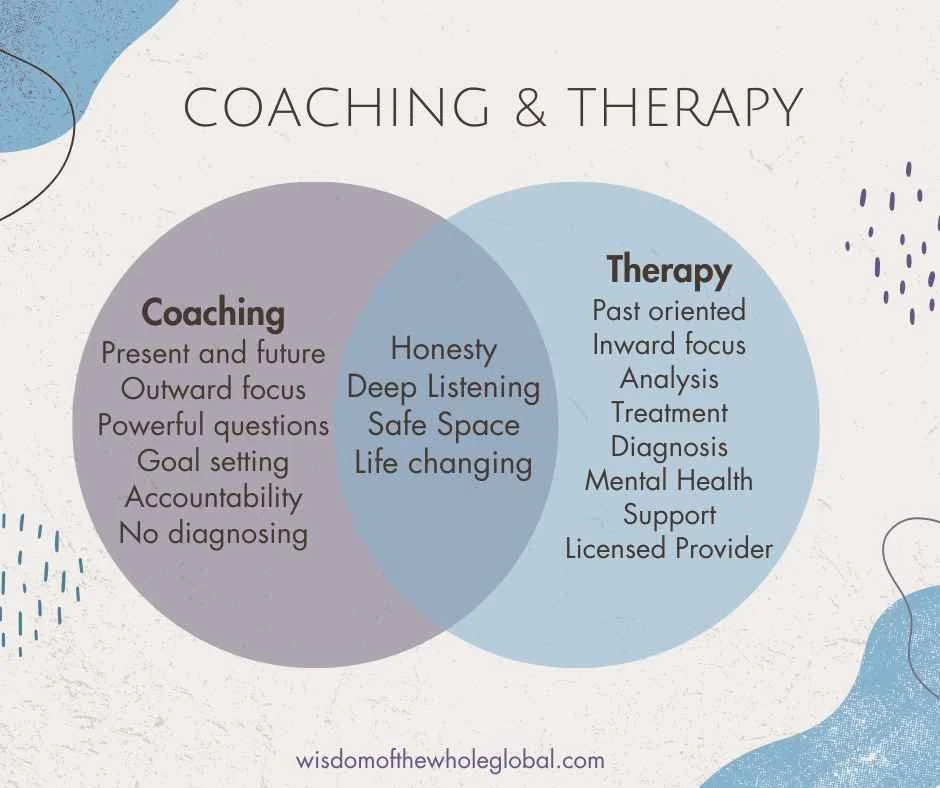
Coaching and therapy both involve deep listening, they both create the space for honesty, and both can genuinely be life changing. But coaching and therapy are not the same thing — knowing the difference matters, particularly when you are navigating something as disorienting as loss, transition, or grief.
Therapy tends to look backward and inward. It is often focused on analysis, treatment of mental health conditions, processing trauma, and healing wounds which could be decades old. Coaching tends to look forward and outward. It's focused on where you are now, where you want to go, and what's standing between you and your next steps. Neither one is “better" than the other, but they serve different purposes. Sometimes people can benefit from both — just not always at the same time, and not always from the same person.

II. Therapy: Healing What Happened
A licensed therapist is trained to diagnose and treat mental health conditions such as depression, anxiety, PTSD, and complicated grief. It often (though not always) explores the past to understand the present and how early experiences, relationships, or trauma shape current patterns.
Therapy is the right space when you are:
Navigating clinical depression, anxiety, or another diagnosed condition
Processing trauma that keeps resurfacing in your body or your relationships
Unable to function, or are overwhelmed with sadness or grief in ways that don't seem to be easing with time
In need of a licensed professional who can prescribe treatment plans or coordinate with medication management
Grief in itself is not a mental illness, but it can grow into something that needs clinical support. A good coach will recognize that line and refer you to the appropriate health care professional when it's crossed.
III. Coaching: Building What's Next
Coaching, by contrast, does not treat or diagnose mental illness. It's built on the belief that most people already carry the wisdom they need — they just need a skilled thinking partner to help access it. A coach asks the kind of questions that help you see your own situation more clearly, and then helps you to build a path forward, one small, authentic step at a time.
Coaching is the right space when you:
Know something needs to change, but you're not sure what or how
Are navigating a life transition — a career shift, an empty nest, a diagnosis, a loss, etc., and need support moving through it, not just processing it
Want accountability and structure for goals you've been circling for a while
Are grieving something (a relationship, an identity, a version of your future you had planned on) and need support building a new path, not just excavating the old one.
This is where grief and coaching intersect more than people expect. Grief isn't only about death. It shows up after divorce, after a diagnosis, after a career ends, or after a role changes. A life coach trained to hold space for these transitions can help someone move through the disorientation of loss and toward a life that feels livable again — without pathologizing what is, in many cases, a deeply human and non-clinical experience.
IV. Where the Line Gets Blurry (and Why It Matters)
In some ways, coaching and therapy can look similar from the outside. Both involve sitting across from someone who listens closely and asks good questions. The difference is in scope, training, and intent.
A well-trained coach knows the scope of their role. They know that if someone discloses active suicidal ideation, unprocessed trauma that's surfacing as flashbacks, or grief that has stopped someone from functioning for months, the responsible course of action is a referral — not an attempt to coach someone through a clinical need.
This is part of why accreditation matters so much when choosing a coach training program. Coaches trained through rigorous, evidence-informed curricula learn not just how to ask powerful questions, but how to recognize when a client needs more than coaching can offer.
V. Why Nurses and Healthcare Professionals Make Exceptional Coaches in This Space
Many nurses and healthcare professionals already have experience in understanding when to refer patients. They are trained to assess, to listen for what isn't being said, and to know when a situation calls for escalation. That instinct — knowing the difference between "this person needs support" and "this person needs a higher level of care" — is exactly what makes nurse coaches and health and wellness coaches so well-suited to hold space for grief and life transition without overstepping into clinical territory.
Nurse coaching and health and wellness coaching takes that clinical intuition and pairs it with the forward-facing, client-centered skill set of professional coaching. The result is a coach who can sit with someone in the messiness of loss or change, without trying to fix, diagnose, or rush them through it.

VI. So, Which One Do You Need?
Ask yourself:
Am I trying to understand and heal something from my past? → Therapy may be the better starting point.
Am I trying to figure out what comes next, and how to get there? → Coaching may be the better fit.
Am I not sure? → That's okay too. Some people work with both a therapist and a coach at the same time, each supporting a different part of the journey.
If you're someone who has walked through your own version of grief or transition and found yourself wishing you had more support — someone who could help you make sense of the disorientation and take the next right step — that instinct is worth listening to.
VII. Ready to Become That Support for Others?
Wisdom of the Whole Coaching Academy's coach training program is built for people who already have the instinct to hold space for others — nurses, allied healthcare professionals, caregivers, and helping professionals who want formal training to do it well, ethically, and effectively.
Our next accelerated coach training cohort begins October 10th. If you've ever thought about turning your natural ability to sit with people through hard moments into a credentialed coaching practice, this is a good place to start. Learn more about your next steps here or join a call to learn more.