Dispelling 6 common myths about coaching
Table of Contents
I. Introduction
Myth #1: Coaching is about giving advice and telling people what to do.
Myth #2: Anyone can call themselves a coach — so credentials don’t matter.
Myth #3: You need to have your own life completely figured out before you can coach others.
Myth #4: Coach training is mostly about learning scripts and techniques.
Myth #5: A holistic approach means it’s soft or unscientific.
Myth #6: You can become a competent coach in a weekend.
II. So What Does Rigorous, Whole-Person Coach Training Actually Look Like?
III. Is Coaching Right for You?
6 Myths About Coaching (And What It Actually Takes to Do It Well)

I. Introduction
Coaching has never been more popular — or more misunderstood. As interest in personal development, health, and well-being continues to grow, more people are exploring coaching, both as clients seeking support and as professionals considering a new career path. But alongside that growth comes a lot of noise — bold claims, conflicting definitions, and confusion about what coaching really is, what good coach training actually looks like, and how to tell the difference between a rigorous program or a trivial certificate.
If you’re curious about becoming a coach — whether you’re a nurse, therapist, teacher, healthcare provider, or someone simply drawn to helping others — this article is for you. Let’s clear up some of the most persistent myths and misconceptions about coaching and coach training so that you can make grounded and well-informed decisions.

Myth #1: Coaching is about giving advice and telling people what to do.
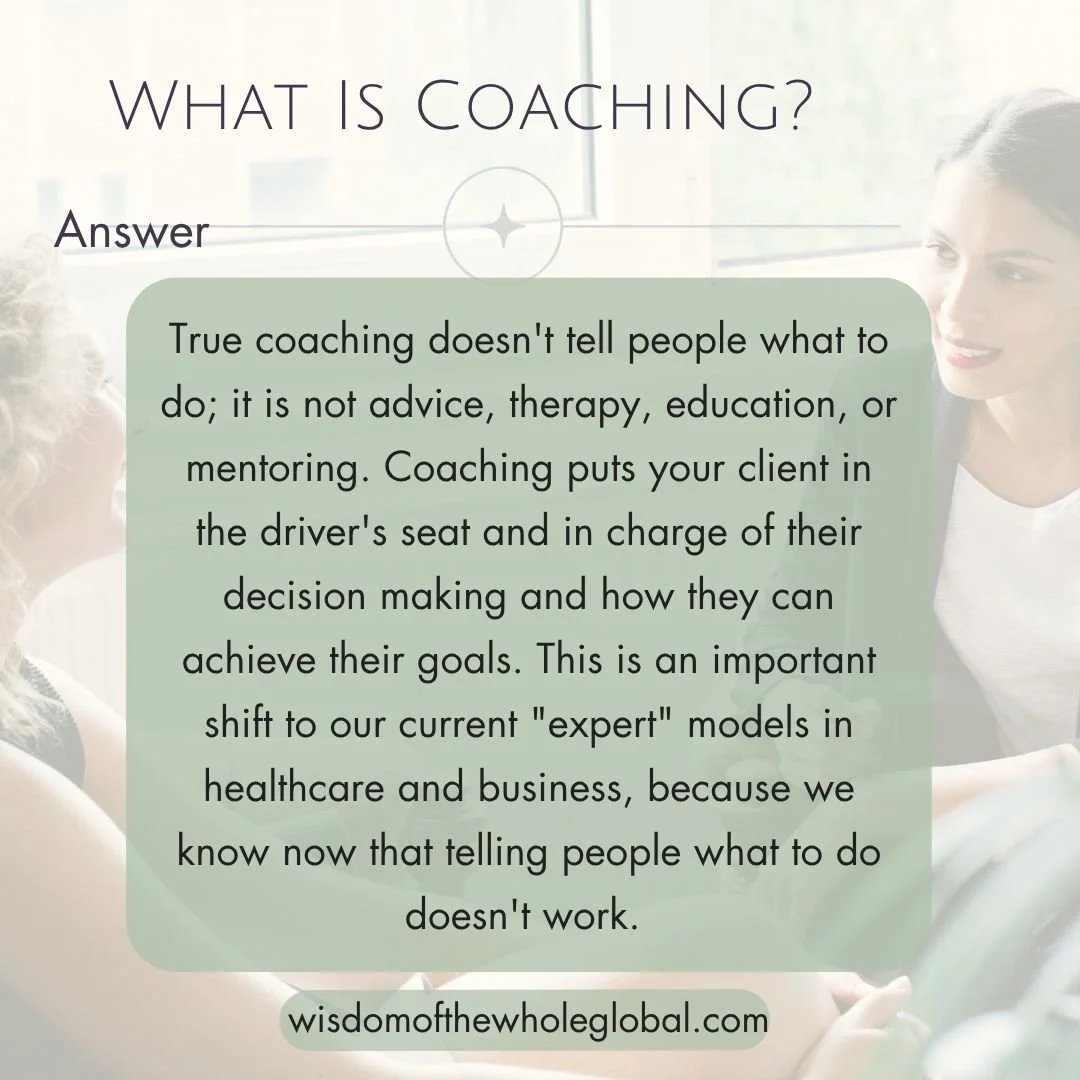
This is probably the most common misconception, and it’s worth addressing first because it shapes everything else. Coaching is not consulting — it is not about telling a client what you think they should do with their life.
At its core, coaching is a professional partnership. A skilled coach creates the conditions for a client to access their own insight, clarity, and motivation — rather than depending on someone else for answers. The coach asks powerful questions, listens deeply, and helps the client move from where they are to where they want to be.
This distinction matters enormously — clients who arrive at their own answers and solutions are far more likely to follow through and be happy with the result than those who’ve been told what to do. In fact, good coaching builds autonomy, not dependency.
Myth #2: Anyone can call themselves a coach — so credentials don’t matter.
Technically, this is true. A “coach” is not a protected title in most countries — anyone can hang out a shingle and call themselves a life coach. However, that doesn’t mean credentials don’t matter — it means they actually matter more, because there’s no external enforcement to protect the public.
If you are considering becoming a coach, you will want to understand the difference between a rigorous, accredited training program and the many short-course certificates that offer the title without the proper foundation.
Here’s what to look for:
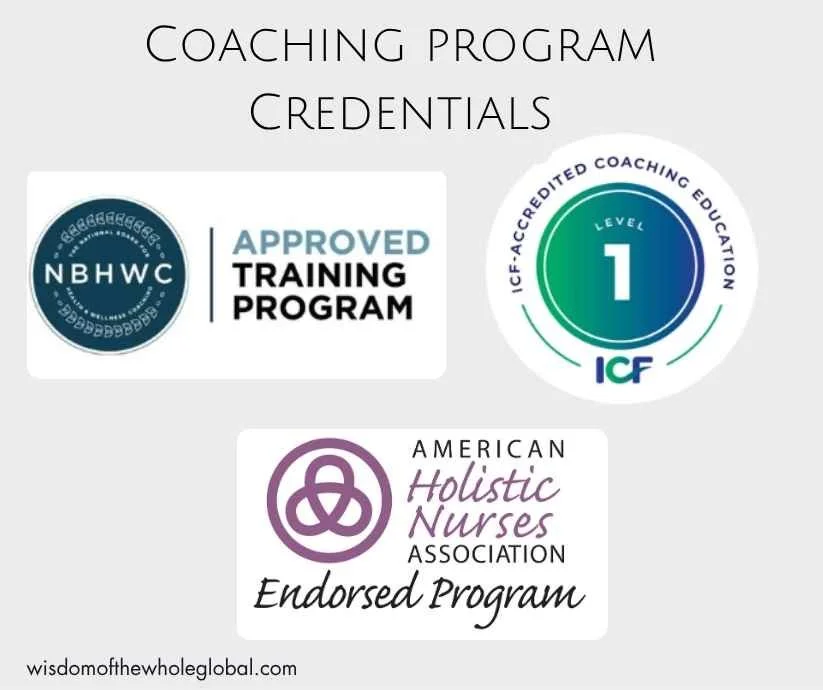
International Coaching Federation (ICF) Accreditation. ICF is widely considered the global standard for professional coaching. ICF-accredited programs meet specific requirements around training hours, mentor coaching, and demonstrated competency. Coaches who pursue ICF credentials — ACC, PCC, or MCC — have met documented standards for their practice.
National Board for Health & Wellness Coaching (NBHWC) Approval. NBHWC is the gold standard in the health and wellness coaching space. Board-certified health and wellness coaches (NBC-HWC) have completed an approved training program and passed a national board exam. This credential is increasingly recognized in healthcare settings, including the Mayo Clinic and the U.S. Department of Veterans Affairs.
American Holistic Nurses Association (AHNA) continuing education approval. AHNA recognizes programs that meet the standards of holistic nursing and integrative health practice. For nurses, AHNA recognition signals that a program honors the whole person and aligns with integrative care principles.
Most coaching schools hold one of these approvals. Very few hold all three.

Myth #3: You need to have your own life completely figured out before you can coach others.
This myth holds a lot of people back, so it’s important to address. No one has it all figured out — not the most accomplished coaches, not the most experienced clinicians, not the most seasoned therapists. The assumption that you need to be “done” with your own growth before you can support others conflates being a guide with being a guru.
What you do need is:
A genuine commitment to your own ongoing development
Training in evidence-based coaching methods and competencies
Supervised practice with real clients
Self-awareness about your own patterns, biases, and edges
The best coaches are not people who’ve arrived somewhere. They are people who are deeply engaged in the same lifelong process they invite their clients into.

Myth #4: Coach training is mostly about learning scripts and techniques.
Some programs do lean heavily on scripts — specific questions, protocols, or flowsheets to follow step by step. There is a place for a foundational framework or structure, especially early in training so that new coaches learn how to not lead clients, but the most skilled coaches aren’t following scripts. They learn how to keep that solid framework in place to support the coaching process, but they are also present, and listening at multiple levels to what a client says, what they don’t say, how their energy shifts, what lights them up and what causes contraction. They’re drawing on a range of tools fluidly, in response to what’s actually happening in the room.
This kind of coaching requires more than technique. It requires developing the coach’s presence — the capacity to be fully with a client without an agenda, without rushing to fix or projecting your own story onto theirs.
Developing that kind of presence takes time, practice, feedback, and a training environment that honors the whole person — not just the skills checklist.

Myth #5: A holistic approach means it’s soft or unscientific.
Holistic does not mean vague, or “woo-woo.” And it certainly doesn’t mean ignoring evidence.
A holistic approach to coaching simply means that the whole person is included in the conversation — not just their goals and behaviors, but their body wisdom, emotions, values, relationships, environment, and their sense of meaning and purpose. Human beings are not just cognitive goal-setters. We are complex, embodied, relational creatures — and the most effective coaching honors that in it’s entirety.
In fact, the research on sustainable behavior change consistently supports a whole-person approach. Interventions that address mindset, identity, emotional regulation, and social context alongside specific behaviors outperform those that focus on behavior alone. This is precisely why integrative models of health and wellness coaching are gaining traction in clinical and corporate settings alike.
A rigorous holistic program weaves together behavioral science, motivational interviewing, positive psychology, somatic awareness, and reflective practice — grounded in evidence, and attentive to the full human.

Myth #6: You can become a competent coach in a weekend.
Yes, you can get a certificate in a weekend, but it is unrealistic that you would be a competent coach. This distinction is not about gatekeeping, but about what actually serves clients as well as what protects them.
Becoming a skilled coach requires a sufficient number of training hours, exposure to multiple theoretical frameworks, substantial practice with real clients, mentoring, feedback, and ongoing self-reflection. The ICF sets minimum standards for a reason, and the NBHWC national board exam requires both training and supervised experience for a reason too. These aren’t bureaucratic hurdles; they’re a standard of care that matters when a client is sitting across from you in a vulnerable moment, trusting you with something real.
If you’re serious about coaching as a profession (and not just a side gig or a title), look for a coach training program that takes the depth of the work seriously.
II. So What Does Rigorous, Whole-Person Coach Training Actually Look Like?
At Wisdom of the Whole Coaching Academy, we’ve spent years thinking carefully about what it takes to train coaches who are not only skilled, but also transformative — coaches who can meet clients in the full complexity of their humanity and support real, lasting change.
Here’s what sets our approach apart:
We’re the only coaching school approved for all three major coach credential pathways — ICF, NBHWC, and nurse coach. This isn’t a minor detail — it means our program meets the most rigorous standards in professional coaching, health and wellness coaching, and holistic nursing — simultaneously. For graduates, it opens doors across healthcare, wellness, corporate, and private practice settings. For our students, it means their investment in training carries recognized, marketable weight.
Our curriculum doesn’t just teach coaching skills; it also cultivates the interior development of the coach as a byproduct. Who you are in the room with a client matters as much as what you know. We weave reflective practice, somatic awareness, and personal inquiry throughout our training, because we know that the depth of your coaching presence directly shapes the quality of your coaching.
We integrate evidence and wisdom, and our curriculum draws on behavioral science, motivational interviewing, positive psychology, and integrative health principles. We don’t choose between science and heart; we build a practice that holds both.
We also support coaches across professional backgrounds — our students come from nursing, social work, therapy, healthcare leadership, education, fitness, and beyond. Many are seasoned practitioners who want to integrate coaching into their existing work, while others are beginning entirely new chapters. Our program meets people where they are and builds from there.
III. Is Coaching Right for You?
If you find yourself drawn to this work — if you’re energized by supporting other people’s growth, if you find yourself having conversations that go deeper than the surface, if you’ve been told you’re a natural listener, if you’re looking for meaningful work that integrates your whole self — coaching may be exactly what you’ve been looking for.
Go in with your eyes open and ask hard questions about any program you’re considering.
The world needs more skilled, grounded, and ethically trained coaches.
If you want to learn more about what Wisdom of the Whole Coaching Academy offers, and whether our program is the right fit for you, we would love to connect. Join us for our next Coaching In Action call!