Why So Many People Quietly consider Career Change in November
Table of Contents
I. Introduction
II. Why November Brings the Career Question to the Surface
III. Restlessness Is Not the Same as Being in the Wrong Field
IV. Questions to Ask Yourself This Month
V. What a Quiet Reconsideration Can Turn Into
VI. Let November Be the Beginning, Not the End
I. Introduction
Most career change doesn't begin with something dramatic — often it begins with a small, persistent question that shows up when you least expect it. Maybe it arrives on the drive home, or surfaces during a staff meeting, when you notice you've stopped caring about the agenda. Maybe it's a Sunday evening heaviness you've learned to brush aside. The question is simple, and a little unsettling: Is this all there is?
If you've been asking yourself some version of that question lately, you are not alone. And if it seems to be getting louder this time of year, there's a reason for that. November has a way of bringing the career question to the surface for many people, including people who are good at their jobs, who care about their work, and who never expected to wonder whether they belong somewhere else.
This isn't a sign that something is wrong with you. It may be a sign that something in you is ready to grow.
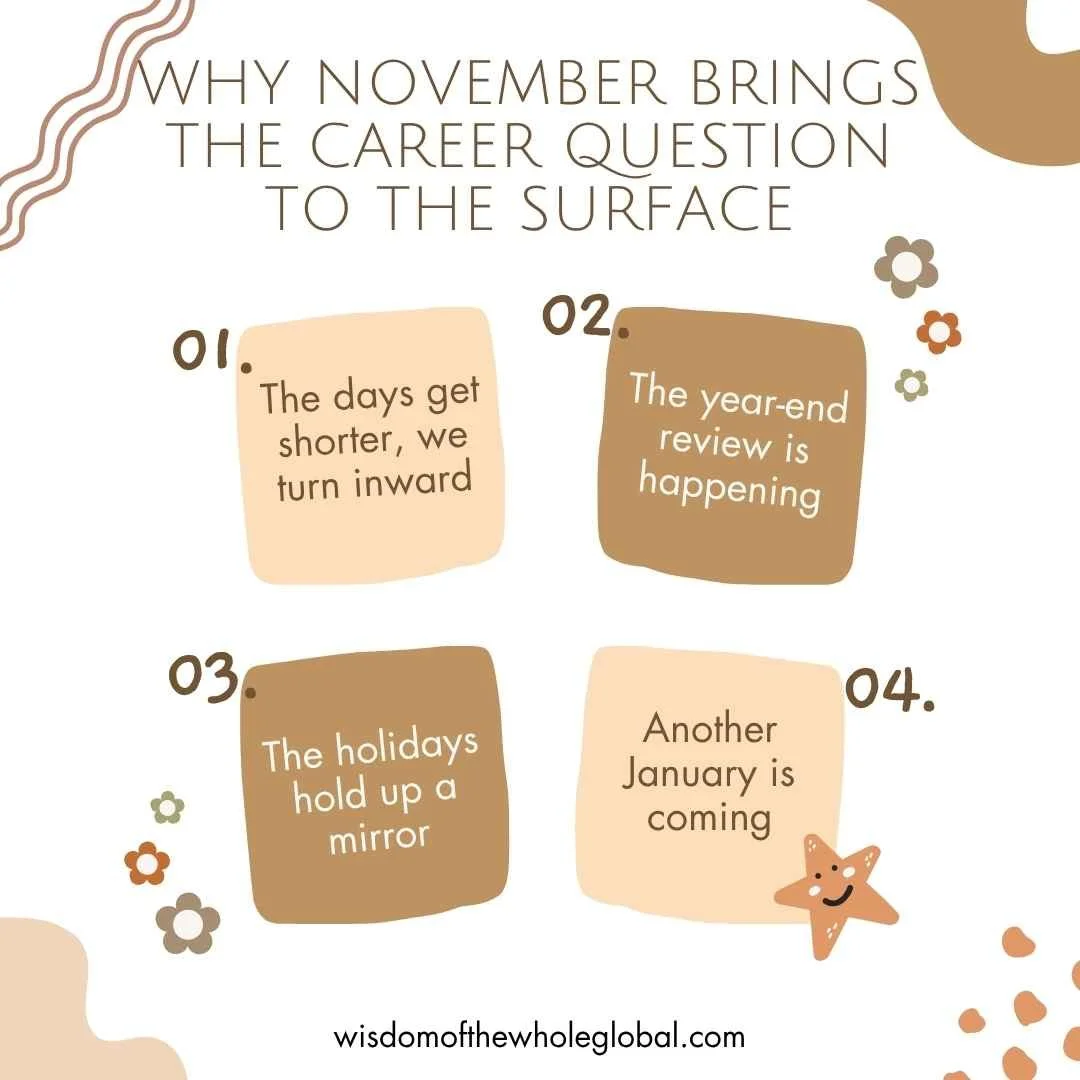
II. Why November Brings the Career Question to the Surface
There's nothing magical about the calendar itself, but November stacks several pressures and pauses on top of each other, and together they create the conditions for honest reflection.
1. The days get shorter, and we turn inward.
When the clocks fall back and darkness arrives before dinner, life naturally slows. There are fewer evenings outdoors and more quiet time at home. That shift inward often brings questions we've been too busy to hear the rest of the year. Rest and reflection have a way of making room for the truth.
2. The year-end review is happening, whether you like it or not.
For many people, November means performance reviews, annual goal-setting, and planning for next year's budget. These conversations ask you to look at where you are and where you're headed. Sometimes the honest answer is "right where I was last year," and that can be pretty frustrating.
3. The holidays hold up a mirror.
Family gatherings bring the familiar question: "So, how's work?" Notice how you answer it. Do you light up, or reach for a polite, practiced reply? Time with people who have known you for years can also remind you of who you used to be, and what you once hoped your work would feel like.
4. Another January is coming.
Perhaps the most powerful November realization is a simple one: the year is almost over. If nothing changes, next November will look a lot like this one. That's not a reason to panic, but an invitation to decide, gently and intentionally, what you want the next year to hold.
III. Restlessness Is Not the Same as Being in the Wrong Field
Here's something worth knowing before you start updating your résumé: feeling restless at work doesn't necessarily mean you chose the wrong career. Often, it means you have outgrown the way you are doing your work, not the work itself. A nurse who feels drained by twelve-hour shifts may still deeply love helping people heal. A manager who dreads another round of meetings may still come alive in one-on-one conversations with their team. A teacher burned out on paperwork may still feel lit up watching someone grasp a new idea.
When you look closely at the restlessness, you may find it's pointing at something specific: You want more meaningful connection, fewer rushed interactions, and more conversations that actually change something.
You might want to use what you know differently — your experience is valuable, but the setting you are in doesn't let you use it fully. You also want more say over your time — not necessarily less work, but work that fits the life you want. You also want to feel like yourself again — values and your daily work have drifted apart, and you would like them to line up.
If any of these resonate, the answer may not be a career change. It may be building on everything you already are.
IV. Questions to Ask Yourself This Month
You don't need to make any decisions about your career change right now, but you can start listening to yourself more carefully. Consider setting aside twenty quiet minutes this week, maybe with a cup of tea and a journal, and gently exploring these questions:
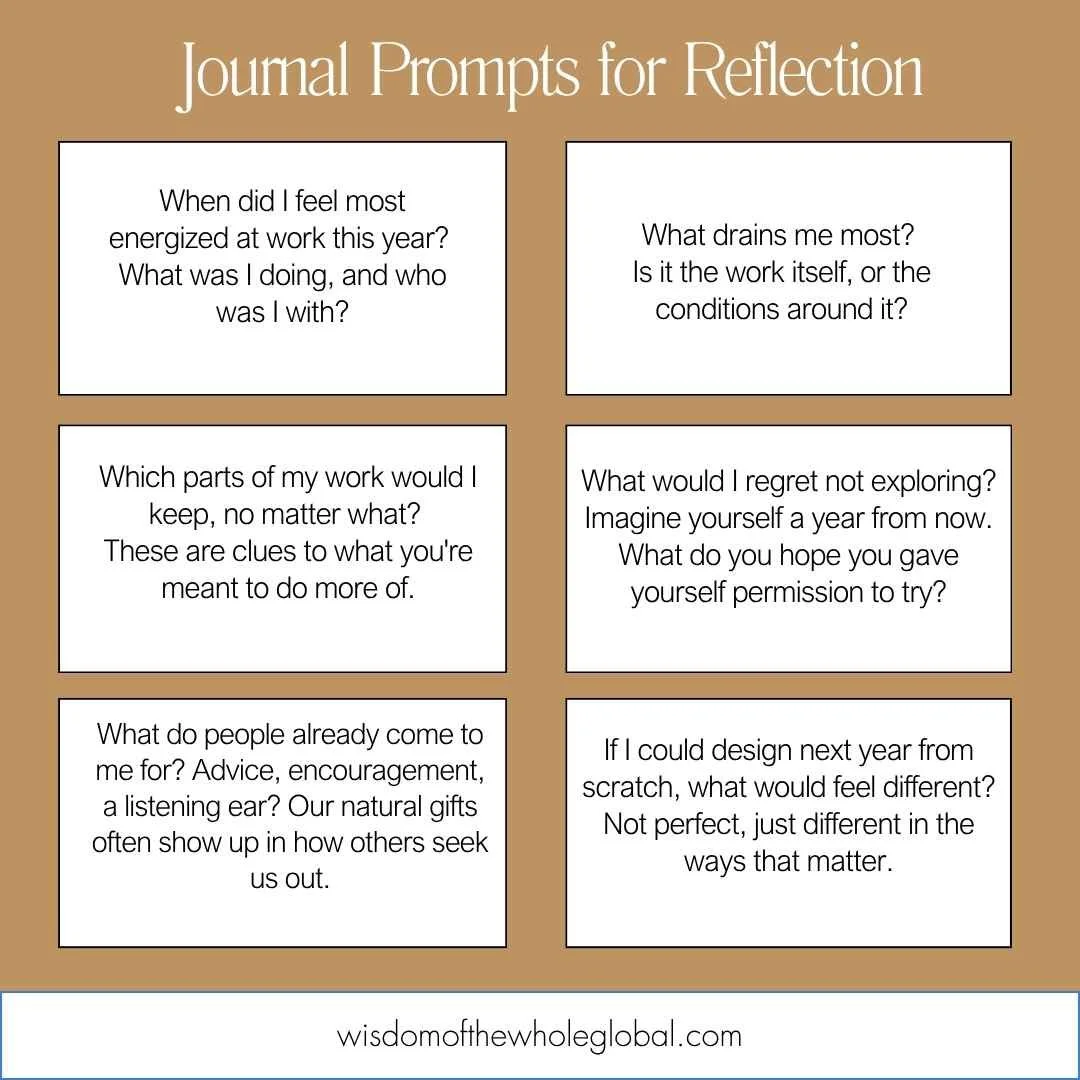
When did I feel most energized at work this year? What was I doing, and who was I with?
What drains me most? Is it the work itself, or the conditions around it?
Which parts of my work would I keep, no matter what? These are clues to what you're meant to do more of.
What do people already come to me for? Advice, encouragement, a listening ear? Our natural gifts often show up in how others seek us out.
If I could design next year from scratch, what would feel different? Not perfect, just different in the ways that matter.
What would I regret not exploring? Imagine yourself a year from now. What do you hope you gave yourself permission to try?
Notice which questions bring up energy and which bring up resistance — everything is useful information. (And there are no wrong answers, only honest ones.)
V. What a Quiet Reconsideration Can Turn Into
Career change doesn't have to mean walking away from everything you have built. For many people, especially those in caring professions, the most fulfilling next step is one that honors their experience while opening a new door. Here are a few paths that people often discover once they start exploring.
1. Adding new skills to the role you already have.
Sometimes the change is internal. Learning to listen more deeply, ask more powerful questions, and support people in finding their own answers can transform how your current work feels. Many nurses, managers, and wellness professionals find that coaching skills breathe new life into roles they were ready to leave.
2. A gradual transition.
You don't have to leap. Some people begin building a new path alongside their current job — taking a training program, working with a few clients, and testing what fits before making a bigger move. A gradual approach lets curiosity lead without putting your stability at risk.
3. A meaningful pivot.
For others, reflection leads to a clear calling. Health and wellness coaching, for example, has become a rewarding path for people who want to help others create lasting change, often drawing directly on years of experience in nursing, healthcare, education, or leadership.
This is especially true for nurses. Nurse coaching lets you keep everything you know about health and human resilience while working with people in a more relational, whole-person way. Instead of rushing from task to task, you partner with clients over time and help them discover what's possible.
Whichever path speaks to you, the first step is the same: give yourself permission to explore.

VI. Let November Be the Beginning, Not the End
The quiet questions that surface this time of year deserve your attention. They aren't a sign of failure or ingratitude. They're often a sign of wisdom, the part of you that knows there is more you are meant to offer.
You don't have to have it all figured out by January — you just have to be willing to listen, and to take one small, curious step.
If coaching has been on your mind, we invite you to consider two possibilities:
1. Discover a coach to help you get clear on your next path. Use our directory to find a Wisdom of the Whole holistic coach.
2. Look into becoming a certified coach through Wisdom of the Whole® Coaching Academy. Our coach training program is grounded in whole-person, heart-centered practice and is the world's first and only single coach training program approved for all three major credential pathways — International Coaching Federation (ICF), National Board for Health and Wellness Coaching (NBHWC), and Board Certified Nurse Coach through the American Holistic Nurses Credentialing Corporation (AHNCC).
Whether you're a nurse looking for a new way to care, a professional ready to use your experience differently, or simply someone listening to a quiet inner question, we'd love to help you discover what's next.
Explore our coach training programs here, or join an upcoming info session here.
Not sure if you're ready? Read our blog post on 7 Signs You're Ready.