The Coach Mindset Shift That Changes How You See Your Year
Table of Contents
I. Introduction
II. The Coach Mindset Shift: From Judgment to Curiosity
III. Why This Shift Works
IV. Try It: A Coaching-Style Year in Review
V. What Changes When You See Your Year This New Way?
VI. The Bigger Picture: This is What Coaches Do Every Day
VII. Begin the New Year with Curiosity
I. Introduction
It usually happens sometime between Thanksgiving and New Year’s Eve. You sit down, maybe with a notebook, maybe just in your head, and you take stock of the year. Almost immediately you are hit by the goals you didn’t reach, the habits that you didn’t stick to, the project you never started, the weight you didn’t lose, or the conversation you kept putting off. Before long, your year in review looks less like a reflection and more like criticism from a failed report card.
If any of that sounds familiar, you are in good company. Many of us were taught to review our lives the way an auditor reviews a budget — hunting for shortfalls, tallying what’s missing, and resolving to do better. It feels responsible, but it rarely leaves us feeling hopeful, energized, or clear about what comes next.
There’s another way to look back on your year. It’s the way skilled coaches invite their clients to look at their lives every day, and it begins with one simple but powerful shift.

II. The Mindset Shift: From Judgment to Curiosity
The coach mindset shift is this: instead of judging your year, you get curious about it.
Judgment asks, “What did I do wrong?” Curiosity asks, “What happened, what did I learn, and where do I want to go from here?”
It sounds small, but it changes everything about how you see the past twelve months.
Consider the difference:
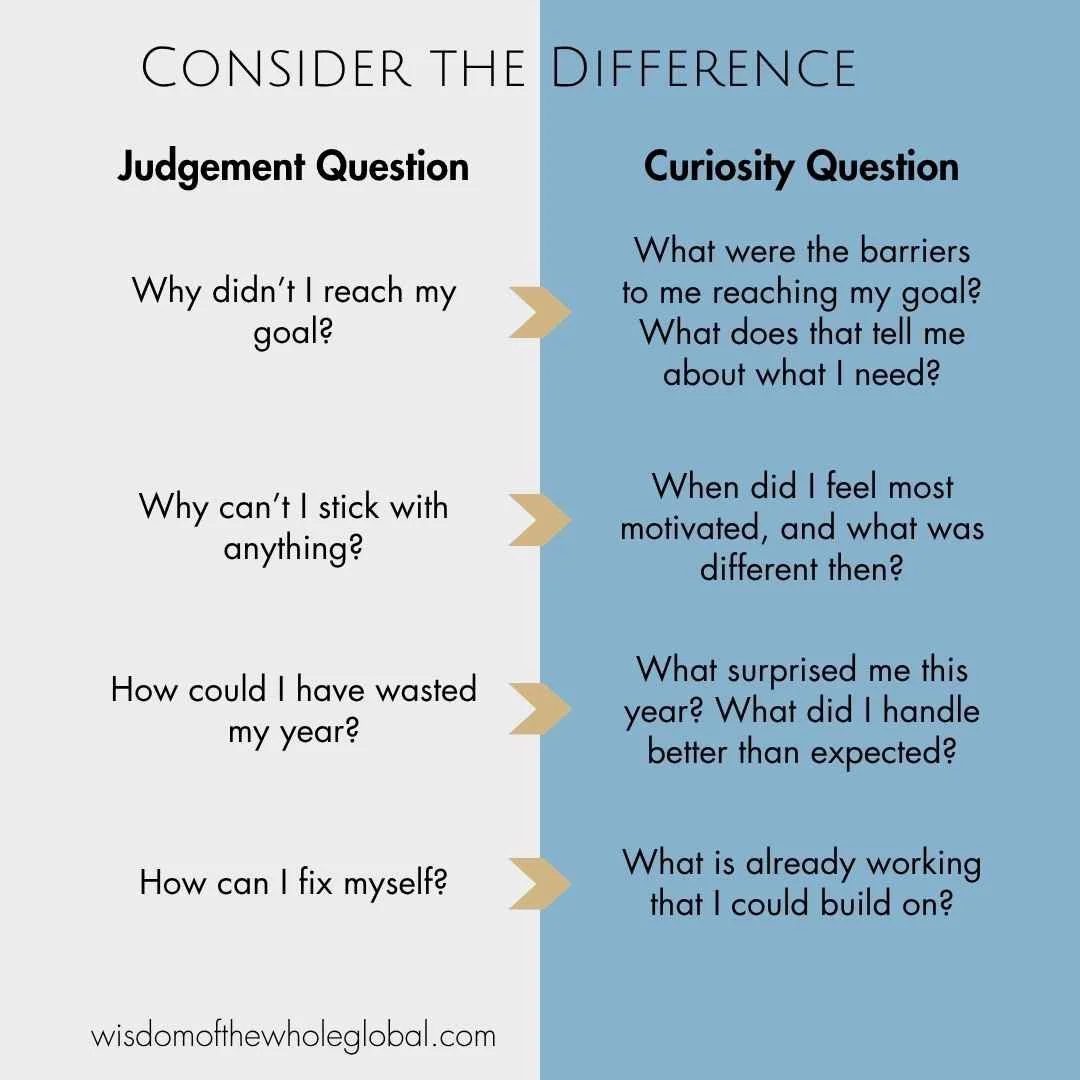
Notice that curiosity doesn’t ignore what was hard or disappointing, nor does it ask you to pretend everything went perfectly. Instead, it treats your experience as valuable information rather than evidence against you.
This is the heart of how coaches work — a good coach doesn’t sit across from a client cataloguing their failures. They ask open, thoughtful questions that help the person see their own experience more clearly, recognize their strengths, and discover their own way forward.
III. Why This Shift Works
It can feel almost too gentle to be useful — shouldn’t’t we be hard on ourselves if we want to improve? In practice, the opposite tends to be true. Judgment shuts us down…and when we look back through a lens of criticism, we often feel defensive, discouraged, or ashamed. Those feelings make it harder to think clearly, and much harder to try again.
Curiosity on the other hand opens us up. When we approach our experience with interest instead of blame, we are more likely to notice patterns, see options, and take honest ownership without getting stuck in self-criticism.
Capitalizing on our strengths not only makes sense but also helps us build momentum. Coaching approaches to situations and perceived problems focus on what’s already working, rather than what’s broken, to help people draw on their existing resources. It’s much easier to grow from a foundation you trust than from a list of shortcomings, and treating yourself with the same kindness you would offer a good friend isn’t letting yourself off the hook — it creates the emotional safety that real, lasting change needs.

IV. Try It: A Coaching-Style Year in Review
Ready to experience the shift for yourself? Set aside thirty minutes somewhere quiet. Bring a journal, perhaps a hot cup of tea, and an open mind. Read each question slowly, and let yourself answer honestly, without editing or judging what comes up.
Part 1: Look back with appreciation.
When did I feel most like myself this year? Describe the moment in detail: where you were, who you were with, what you were doing. What am I proud of that no one else may have noticed? (Small wins count, sometimes they mean the most.) What did I handle better than I would have a few years ago? Growth often shows up in how we respond, not just what we achieve.
Part 2: Look back with curiosity.
What was the hardest part of this year, and what did it teach me? (You don’t have to be grateful for difficult experiences to learn from them.) Where did my energy go? Which people, tasks, or commitments filled me up, and which drained me? What surprised me about my work, my relationships, or myself?
Part 3: Look forward with intention.
What wants to grow in my life next year? Not what you should do, but what genuinely calls to you. What’s one small step I could take in January that my future self would thank me for? Keep it specific and kind.
When you are finished, read your answers back and notice how it feels compared to the usual year-end tally. Many people find that they leave this exercise with more clarity, and more hope, than they expected. This is the beauty of having a coach mindset.
V. What Changes When You See Your Year This New Way?
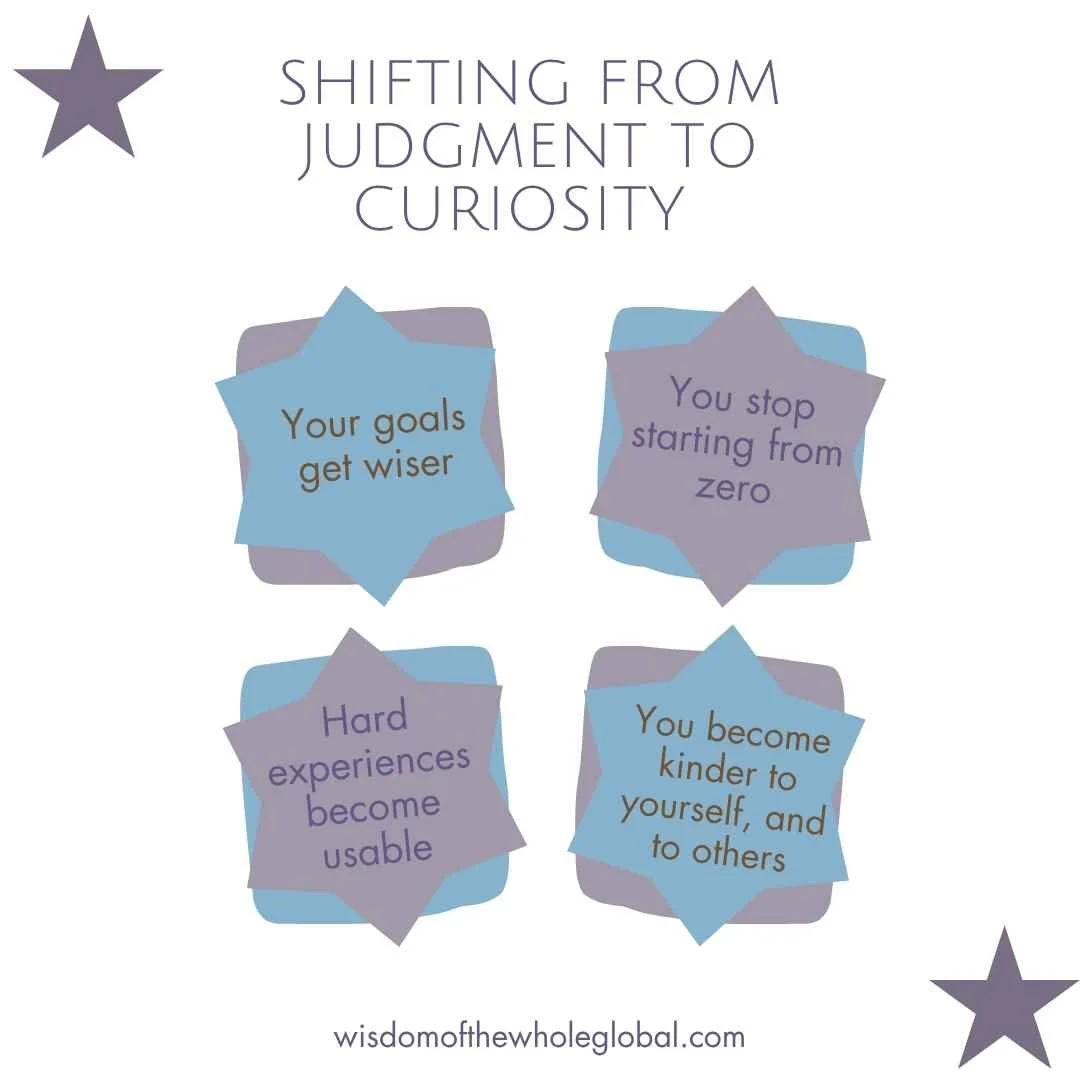
Shifting from judgment to curiosity doesn’t change what happened this year, but it can change what happens next.
1. Your goals get wiser.
When you understand why something didn’t work, rather than scolding yourself for it, you can set goals that actually fit your life — instead of repeating the same resolution for the fifth year in a row. You can now design something that honors your real energy, priorities, and circumstances.
2. You stop starting from zero.
A judgment-based review makes it feel like you’re always beginning again and recovering from being “wrong” somehow. A curiosity-based review on the other hand reminds you of everything you’ve already built: skills, relationships, resilience, insight. You can start the New Year from a solid foundation.
3. Hard experiences become usable.
The difficult parts of your year don’t disappear, but they can stop being painful memories. They become sources of wisdom you can carry forward.
4. You become kinder to yourself, and to others.
When you practice curiosity with your own life, it becomes more natural to offer it to the people around you. Colleagues, family members, and friends begin to experience a version of you that listens more and judges less.
VI. The Bigger Picture: This is What Coaches Do Every Day
If the questions above felt meaningful, you’ve just had a small taste of what it is like to be coached. Professional coaches use this same mindset shift from judgment to curiosity in nearly every conversation. They help clients look at their lives with fresh eyes, uncover strengths they may have overlooked, and find their own answers — instead of being told what to do. It’s a deeply human way of helping, built on listening, presence, and thoughtful questions.
For some people, discovering this mindset is a gift they give themselves at the end of the year. For others, it sparks something bigger — they realize they would love to help other people experience this kind of clarity, too.
The path to becoming a coach often begins with a more subtle recognition instead of a dramatic decision. Many of the people drawn to coaching are already natural listeners and helpers, often nurses, healthcare professionals, educators, and leaders who have spent years caring for others and want to do it in a more relational, whole-person way.
If you’ve been feeling that pull, you may also find our blog post Why People Quietly Consider Career Change in November worth a read.
VII. Begin the New Year with Curiosity
Your year doesn’t need to be graded, but it does deserve to be understood. As this year draws to a close, consider giving yourself the gift of a different kind of reflection: one that honors what you’ve lived through, notices what you’ve learned, and gently asks what you want next. You may be surprised by how much wisdom is already there, waiting to be noticed.
And if this way of seeing has sparked something in you, Wisdom of the Whole® Coaching Academy can help you explore it further. Our coach training program is grounded in whole-person, heart-centered practice and is time-tested over 30 years. Our graduates join a community helping shape the future of coaching in healthcare and beyond.
Whether you want to bring coaching skills into the work you already do or begin an entirely new chapter, we would love to help you take the next step. Explore our coach training program here, or attend one of our Coaching In Action calls here.
Curious what coaching really looks like? Read What Does a Life Coach Actually Do? or see 7 Signs You’re Ready.